
Bonsai Care
- Details
- Category: Broadleaf Bonsai
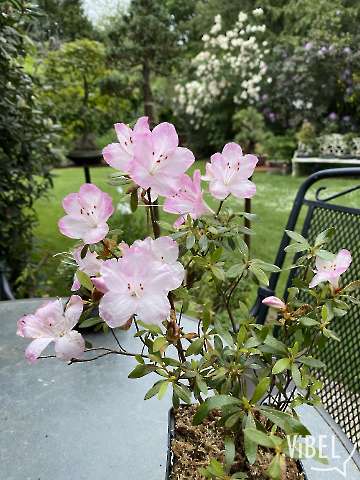
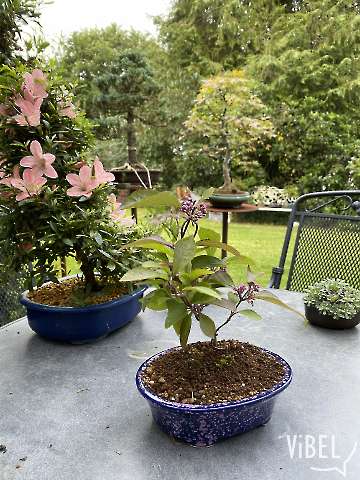
The more I read about Satsuki azalea, the more interesting it tends to become. I already was aware that, due to its different requirements in care taking, Satsuki is a very different branch in the bonsai growers industry, with its own rules and depth in quality appreciation. You can follow the progression of my personal collection here.
Satsuki with its approx. 5000 variants is only one of the many cultivars of Azalea, 20 of which you can find in the azalea database by Mark Nijland.
To emphasize their beautiful bloom, rather than developing a more interesting bonsai shape, Satsuki tend to be grown into so called "flower towers".
My favourites though are in fact those well shaped -mostly as moyogi (informal upright) styled- ones, for their magestic foliage and bark colour combination, where the flowers come as a plus. After all, it only takes 30 years to style one.
Peter Warren, a reknowned UK based Satsuki bonsai specialist, stresses to choose well, for the flower tower variaties are not at all suited to be shaped into a "classical" bonsai style.
- Details
- Category: Conifers
Repotting
The best time to repot Junipers is March/April, up to very early May.
Juniperus Rigida (Tosha) can be repotted later, early to end of May, for they tend to wake up slightly later.
Source: Peter Warren (saruyama.co.uk)
Structural bending and pruning
Best time for major branch removal / trimming is spring, just as the tree is coming out of dormancy.
Best time for major wiring / bending (trunk and primary branches) is also spring, or in early fall just as temps cool.
Avoid this type of work in June, July, and August, the bark might separate from the cambium layer and your Shinpaku tree could die as a result. Light pruning is fine, but hard bending is a "no-no".
Foliage Pruning
Best time for foliage removal is during the growing season, sparingly to maintain a clean look on finished trees.
Source: Brian Van Fleet - https://www.bonsainut.com/threads/juniper-bonsai-styling-timing.36703/
Needle loss in Summer (Toya)
In summer, Juniperus may naturally shed its needles in some areas. This is called "Toya" in Japan: the needles turn yellow and fall off. This is a natural process, compare it to pigeons molting their flight feathers, which are shed and then grow new ones.
Grafting
Scion grafts on junipers are pretty easy to do. We do these about April/May.
Source: https://www.bonsainut.com/threads/juniper-foliage-reduction.71979/post-1239595
- Details
- Category: Pines
Spring Candle Pruning & Shortening
MidSummer is Pine Time
Do keep in mind that the preferred time for major pruning work is mid summer. In our time zone that is July.
October Care
October is one of the rare time slots where the sap flow on two needle pines is low and the tree can be needle plucked.
Care Guide
You can find an exquisite care guide for Scots Pines in the resources section of bonsainut.com.
(Find the download link to the PDF in the upper right corner of the page)
My personal keynotes:
- Spring: bud reducing
- Mid Summer: Pruning in July
- Early October: the only window for needle plucking (!)
- Age: Doug Gilbert at Dundreggan, UK: "Scots pine can live well over 500 (five hundred) years"
- Details
- Category: Other Deciduous Bonsai
How to get three flushes in a Hawthorn growing season (mid development)
- Do the first pruning when the first flush has hardened of.
- Wait until the wood at the second flush turns reddish. When the branches turn deep red you can wire them again until they harden off.
- With some luck you will then get a third flush of growth in the same growing season.
Source: Tony Tickle 202606
Subcategories
|
|

Comments