
Deciduous Bonsai
- Details
- Category: Broadleaf Bonsai
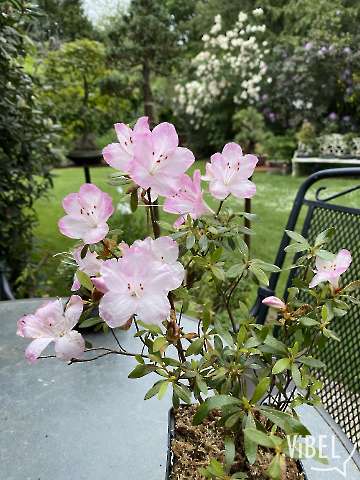
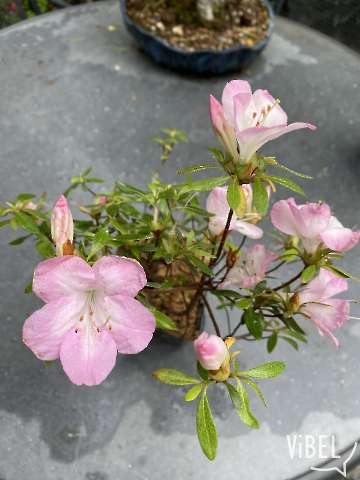
The more I read about Satsuki azalea, the more interesting it tends to become. I already was aware that, due to its different requirements in care taking, Satsuki is a very different branch in the bonsai growers industry, with its own rules and depth in quality appreciation. You can follow the progression of my personal collection here.
Satsuki with its approx. 5000 variants is only one of the many cultivars of Azalea, 20 of which you can find in the azalea database by Mark Nijland.
To emphasize their beautiful bloom, rather than developing a more interesting bonsai shape, Satsuki tend to be grown into so called "flower towers".
My favourites though are in fact those well shaped -mostly as moyogi (informal upright) styled- ones, for their magestic foliage and bark colour combination, where the flowers come as a plus. After all, it only takes 30 years to style one.
Peter Warren, a reknowned UK based Satsuki bonsai specialist, stresses to choose well, for the flower tower variaties are not at all suited to be shaped into a "classical" bonsai style.
- Details
- Category: Deciduous Bonsai
This article is focused on providing additional value, more details on deciduous bonsai care and reminding us of important details as provided in Bjorn Bjorholm's very instructional video.
- Details
- Category: Other Deciduous Bonsai
Do not fertilize in spring until the leaves have grown out.
One thing I learned very quickly is to never fertilize any deciduous tree until the leaves have flushed out in spring. The reason for that is very simple: as we want internodes to be as short as possible and have a tight ramification on the tree, fertilizing in spring - especially with high nitrogen fertilizers- would push the tree to produce longer internodes. Having too much space between each leaf is is exactly that which we want to avoid. The second problem is that high nitrogen fertilizers stimulate the bonsai tree to produce much larger leaves. That too is not on our want-list.
Wiring and styling flowering apcricot trees is typically done in early spring when the leaves have flushed out and hardened off. It is the only time of the year that the branches are very flexible and will not break off. Don't try to wire at other times of the year, your branches are guaranteed to snap when you do. Use a slightly tighter pitch then 45° when wiring because of that brittleness of apricot branches. Better use a thinner wire and double up, rather than using a thick wire.
YouTubes
by Eisei-en (Bjorn Bjorholm) Defoliating Flowering Apricot Bonsai
- Details
- Category: Acers
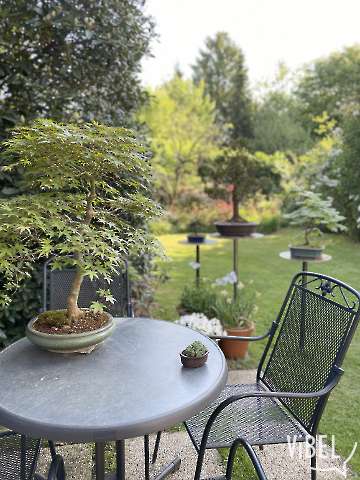
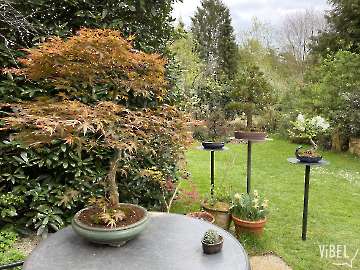
Anticipating to pruning your Japanese Maple right on time? This is one of the best autumn maintenance tutorials on Acer palmatum bonsai I have seen to date. Graham Potter of Kaizen Bonsai shares meticulously why the timing is so important and how to pay attention to pruning, detailing his vision of long term development of his tree.
Why should we prune our Japanese Mape right before leaf drop ?
Graham Potter: "the reason to prune the tree right before the leaves naturally drop is because we've got a few weeks where it's not going to be typically cold. So even if the tree has no leaves, the roots are still actively pushing nutrients into the tree and the buds. For that reason, the growth in the spring will be much more even. This is the benefit of this pruning."
Comments