
The more I read about Satsuki azalea, the more interesting it tends to become. I already was aware that, due to its different requirements in care taking, Satsuki is a very different branch in the bonsai growers industry, with its own rules and depth in quality appreciation. You can follow the progression of my personal collection here.
Satsuki with its approx. 5000 variants is only one of the many cultivars of Azalea, 20 of which you can find in the azalea database by Mark Nijland.
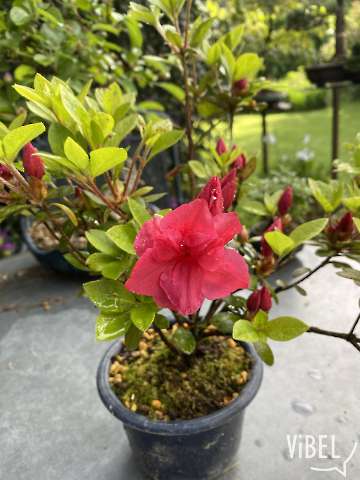
To emphasize their beautiful bloom, rather than developing a more interesting bonsai shape, Satsuki tend to be grown into so called "flower towers".
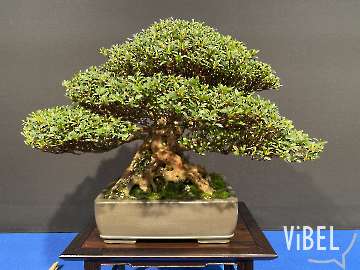
My favourites though are in fact those well shaped -mostly as moyogi (informal upright) styled- ones, for their magestic foliage and bark colour combination, where the flowers come as a plus. After all, it only takes 30 years to style one.
Peter Warren, a reknowned UK based Satsuki bonsai specialist, stresses to choose well, for the flower tower variaties are not at all suited to be shaped into a "classical" bonsai style.
How Azalea's are Different
They are
- bottom dominant, whereas most decidious trees are top dominant. Basically because they are not trees, but shrubs. Building and maintaining the apex is more delicate and top growth tends to require special attention.
- favouring kanuma soil, a clay based acidic substrate with fine pores, suiting their fine hairy root system. Although most sources suggest a 100% kanuma mix, Danny Use of Ginkgo Bonsai recommends to mix it with akadama, because kanuma based Satsuki bonsai tend to show foliage deficits and health issues in our North-European climate.
- sensitive at their root core. So, preferably leave the root ball below the stem untouched, or handle with extreme care, when repotting or doing root work.
However, when growing satsuki as shohin, Japanese sources mainly recommend to clean the root core with water or a water gun. This is worth checking out.
Which Satsuki Azalea to Shape as Bonsai ?
The approx. 5000 Satsuki varieties are classified by their flower size, flower pattern and colors and leaf size. Small flowers generally also indicate a small leaf size.
( [C]-marked Satsuki are the ones I take care of in my collection)
XS - Extra Small or Tiny Sized Satsuki (up to 3 cm)
Tiny sized or extra-small flowering Satsuki are Senbazuru, Kotaro, Hoshi-no-Kagayaki, Miyamamangetsu [C], Kosuzu, Kakuou.
S - Small Sized Satsuki (3-5 cm)
Small sized flowers with small leaves are the ones preferred for bonsai shaping: Secchu-no-Matsu (white), Kinsai (+++), Chojuho, Hinomaru (+++), Matsunami (+++), Korin, Aozora (+++), Momoka, Kozan, Nikko [C] (+++).
Well known small leaf sized Satsuki (<2 cm) are Kotaro, Kazan, Shugetsu
M - Average / Medium Sized Satsuki (5-7 cm)
Osakazuki is considered the basis of all Satsuki azalea. Other welll known medium sized Satsuki are Yata-no-Kagami, Gyokurei, Kougetsu, Kunpuu, Kikouchi, Kobai, Suzu-no-Homare, Akemi-no-Tsuki [C], Kaminoyamakirin [C], Kinu-no-Mai, Shien, Wakaebisu.
L - Large Sized Satsuki Flowers (7-10 cm)
Large Sized Satsuki flowers are Koka, Suisen, Asuka [C], Kaho, Izayoi, Issho-no-Haru, Yama-no-Hikari.
H - Huge Sized Kiodairin Satsuki (10-15 cm)
Satsuki with flowers sized above 10 cm are called a "Kiodairin", such as Meicho, Daisetsuzan, Benigasa, Shinkigen. Giant Satsuki are rare and hard to find.
The most famous satsuki are listed with pictures at azaleadatabase.com, where you can also read a truly valuable article about which cultivar is the most suited for bonsai.
Optimal Growing Conditions
Azalea are undergrowth plants. They need two essential conditions: semi-shade and constant humidity. This is why it is essential protect them from too strong sunny midday conditions (mainly in summer, netting is a must where shade cannot be provided) and be vigilant about their soil condition.
Watering Satsuki Bonsai
Although Azalea embrace humidity, allow the surface to dry up between watering cycles. Constant soaking conditions are to be avoided.
Preferably water the soil, avoiding the foliage. At blooming time, watering the flowers shortens their lifespan dramatically. If possible, keep azalea blossoms sheltered from rain.
When your Azalea bonsai appears dry, water abundantly, until the water comes out of the drainage holes. In the winter months watering is reduced. It may be sufficient to water weekly.
Since Satsuki azalea's have a hairy root system. Over time, especially at the root core right under the trunk, this root system tends to make water absorbtion difficult.
It is recommended to make a hole with a bamboo stick (and remember the location of that hole) to keep that core well watered. Another watering practise is to slightly tilt the bonsai pot, to make sure the water runs along the whole bottom of the pot.
Post Flowering Pruning & Fertilizing (Higari)
Higari is the essential maintenance part of your Azalea.
- Remove the flowers and the seedheads when your shrub is becoming unsightly (generally when half or more of the flowers are done blossoming). Do not neglect to remove all the ovaries, for they take away a lot of energy from your plant.
- Prune to only keep two horizontal shoots and remove excess shoots.
- On each shoot, remove any old leaves and then leave two freshly grown leaves. Another two new leaves will sprout from there.
- Fertilize as you would any other deciduous bonsai until July. Suspend fertilizing in August. After that, start with autumn fertilization.
When and How to Wire Azalea Bonsai
Use a thicker wire as basis. 2mm wire is the standard. Azaleas need it as support to the bending. Use 1.5 mm for smaller branches. Wire loosely, looser than you would with other deciduous trees, since Azalea branches thicken up quite fast.
Wiring Satsuki Azalea in early summer is delicate as the branches are really soft and will tear off easily. You would want to be quite experienced to wire at this time of the year. The optimal time for wiring is September/October in Europe, however, the bark is likely to damage.
Sourcing Quality Satsuki Material
For some time now I have been hunting for the multi color Asuka satsuki for its beauty, enflamed by Jelle's great youtube on the subject.
Eventually I stumbled upon https://minisatsuki.com/ in Bretagne, France, where I ordered one, using Jelle's magic trick to appear to be knowledgeable.
Here is part of the conversation I would like to share with you, that proves how this source is passionate & knowledgeable about Satsuki and has a wide palette on offer.
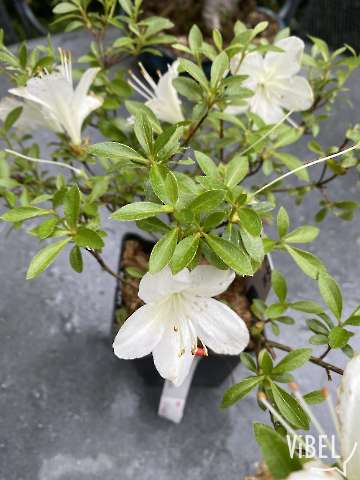
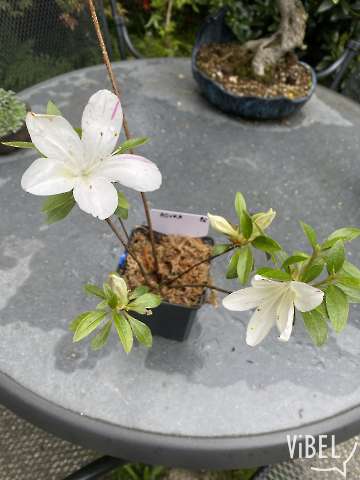
"So, I m happy to write to a satsukis passionate! You are the first one to indicate a white flower asuka gives more chance to get a tri-colour asuka! Thanks for that!!
You will never see in our website a Full purple color asuka. Because it will never get the real color of an asuka, as you know!
That s why our seedlings are often white, or with a very tiny mark of the color. We want our passionate followers to get the true variety. (...)
When our season starts, we put our seedlings online once they are identified, when they bloom. So we add satsukis almost everyday during 3 months. Last year we had more than 180 varieties online (seedlings, pré-bonsais, and bonsaïs)
We work with bookings if ever you want more. So l can send seedlings in one package only. For that, just send me a mail with the name of the variety and the UGS number 0426xxxx ( Month and year)
Comments